 How-to
How Long Does Custom Clothing Take? A Step-by-Step Timeline
Last Updated: November 21, 2026
Quick Summary
Custom clothing usually takes several weeks from order to doorstep, because it moves through design brief, artwork approval, sampling, bulk production and shipping. Timing depends on your provider, garment, decoration method and order size. Approving artwork quickly and asking whether a quoted lead time includes shipping are the biggest factors you control.
- Send one complete design brief with final text, colors and placement to avoid delays.
- Production cannot begin until you approve the final artwork proof.
- Ask whether a quoted lead time includes shipping before you commit to a date.
- Plan backward from your deadline and add a buffer of at least a week.
Table of Contents
- How Long Custom Clothing Takes From Order to Doorstep
- Step 1: Place Your Order and Lock in the Design Brief
- Step 2: Approve Your Artwork Before Production Starts
- Step 3: Sample Development and Approval
- Step 4: Bulk Production and Shipping Time
- Factors Affecting Custom Clothing Turnaround
- Planning Backward From Your Deadline Before You Order
- Pick Your Next Drop and Start Your Order
- Frequently Asked Questions
How Long Custom Clothing Takes From Order to Doorstep
Custom clothing takes longer than a shirt off the rack, and that's the trade-off for getting exactly the design you want. Most custom apparel moves through a set of stages: order and design brief, artwork approval, sampling, bulk production, and shipping. Each stage has its own timing, and a delay in one pushes the next.
Turnaround times vary from one provider to another and from one order to the next. The rest of this guide walks through each stage so you can plan your own timeline.
Step 1: Place Your Order and Lock in the Design Brief
Your order starts with a clear brief: the design, garment style, colors, quantities and print placement. Every detail you settle now saves time later.
Estimates for custom apparel differ between providers, so ask your provider what their estimate includes.
Tip: Send one complete brief instead of several partial ones. Each back-and-forth adds days.
Step 2: Approve Your Artwork Before Production Starts
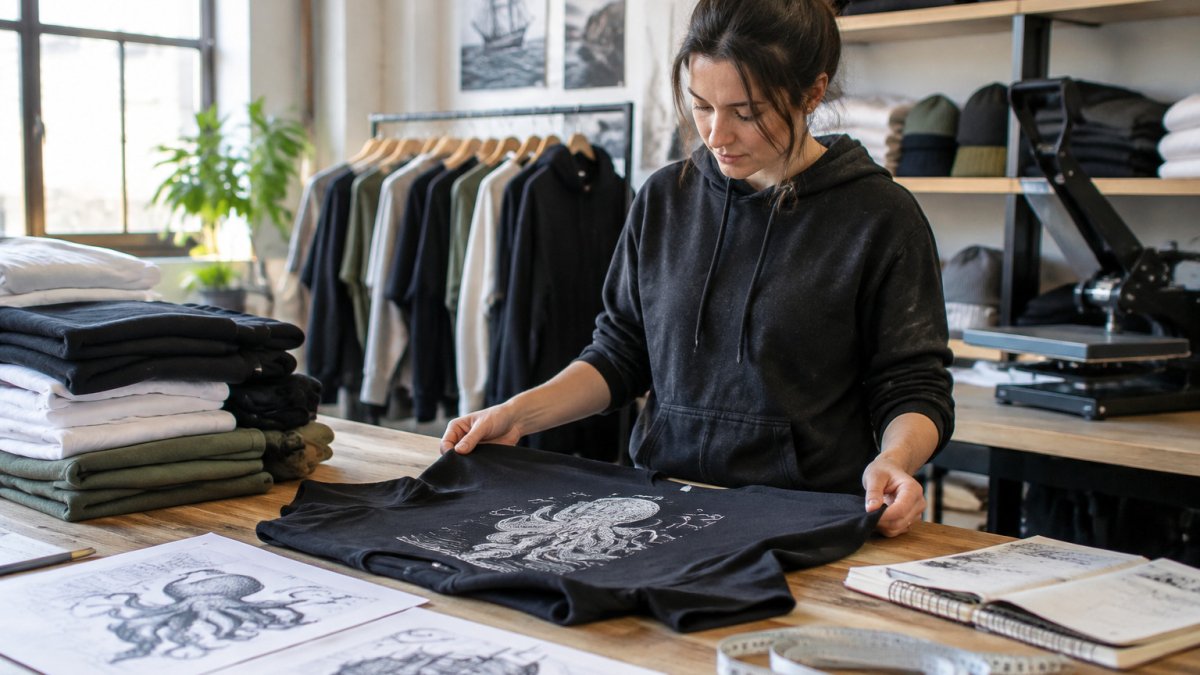
Artwork approval is where most custom orders lose time. Production cannot begin until you sign off on the final proof, so check colors, text spelling and placement carefully before you approve. Our guide shows you how to tell a quality custom print from a poor one before you sign off.
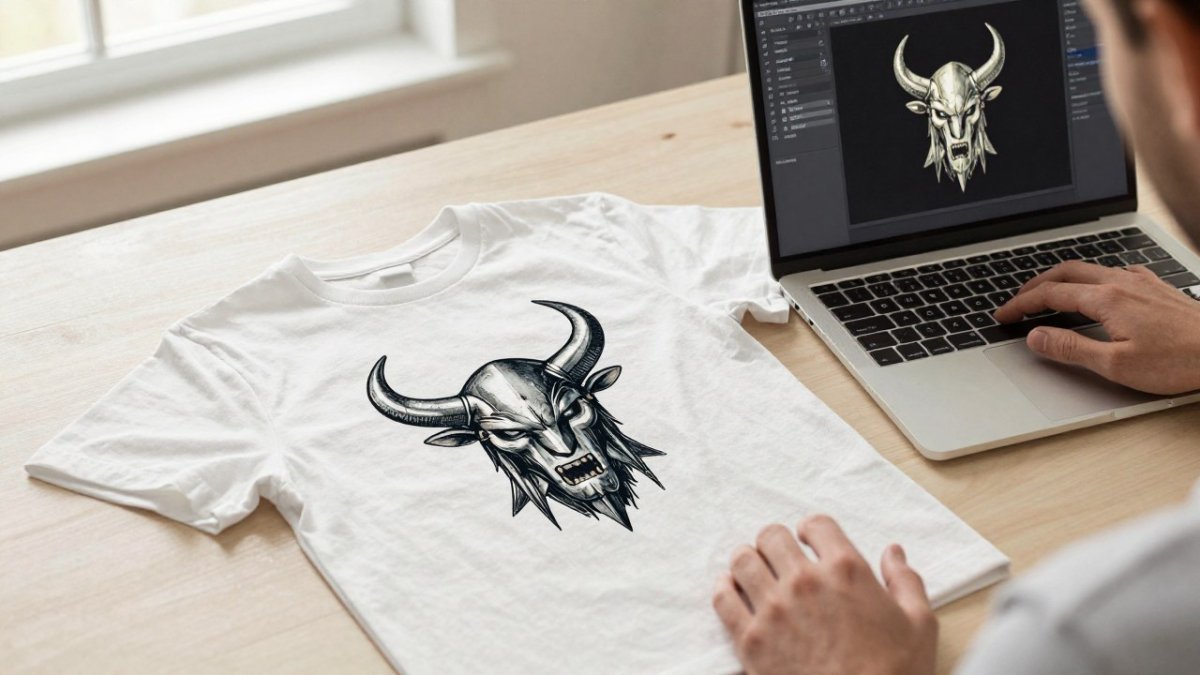
Read proofs on a screen and in print form if you can. A design that looks sharp on your laptop can look different on a dark shirt.
Watch out: approving a proof too quickly and spotting a typo after bulk production starts can mean reprinting the whole run.
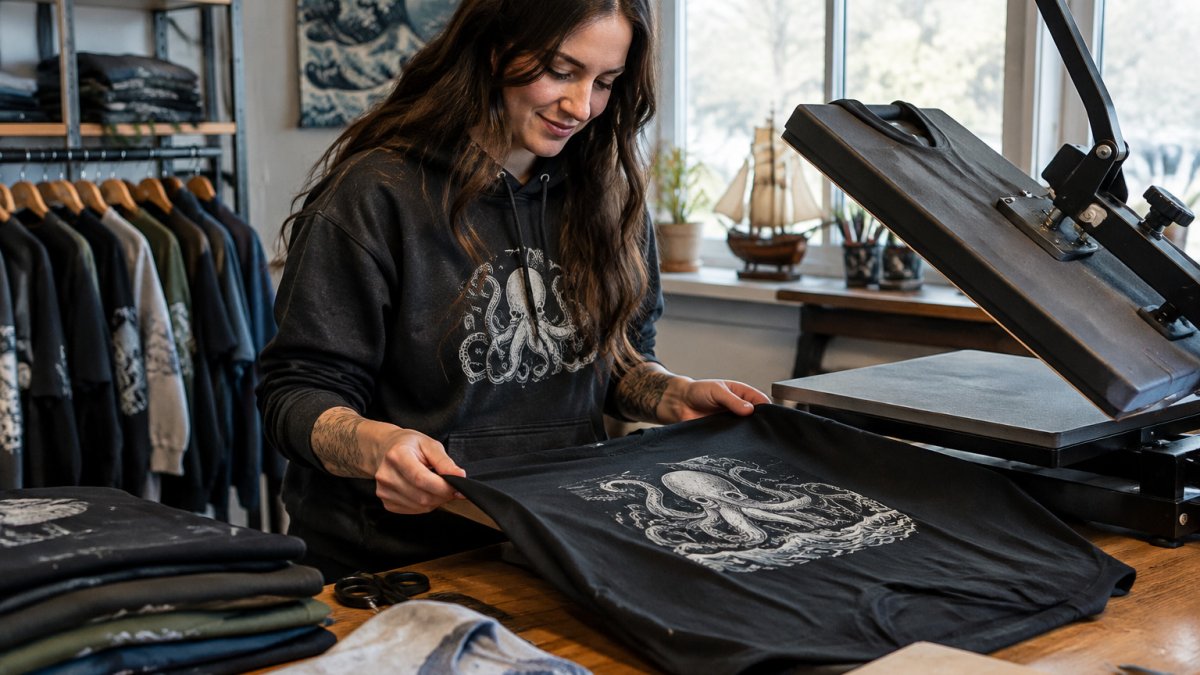
Browse our artist designed apparel notes to understand how our Viking, nautical and cryptid artwork is made before you sign off on a design.
Step 3: Sample Development and Approval
Many custom orders include a sample before the full run. Use the sample to check fit, print quality and color on the actual garment.
Ask for the sample to be sent on the same blank style you plan to order. Testing a different cut or fabric can mislead you about the final result.
Step 4: Bulk Production and Shipping Time
Once you approve the sample, bulk production begins. This is where the category of custom clothing matters most, because a tailored garment and a printed tee are not built the same way.
Bulk production time depends on the garment, the decoration method and the quantity, so confirm the timeline for your specific order with Siren & Ember before you commit. Once your order arrives, you can learn how to wash, dry and store printed shirts so the print lasts.
Decoration method can change the schedule, so ask which method your order uses and how it affects timing.
Shipping is a separate clock, and it is the stage buyers most often forget to ask about. Shipping speed depends on the carrier and the service you choose (Mail & Shipping Services). A quoted production lead time that excludes shipping is not your delivery date. Ask your provider one direct question: does this number end when the box leaves the building or when it reaches my door?
Watch out: a quote that bundles production and shipping into one range can hide which stage is actually the bottleneck, so ask for the two numbers separately before you commit.
Here is how the main timing factors stack up, using the stages covered in this guide.
| Stage | What it covers | Timing note |
|---|---|---|
| Order and design brief | Design, garment style, colors, quantities, print placement | Settle every detail now to avoid later delays |
| Artwork approval | Final proof sign-off | Production cannot begin until you approve |
| Sample development | Fit, print quality and color check | Test on the same blank style you plan to order |
| Bulk production | Printing or decorating the full run | Depends on garment, decoration method and quantity |
| Shipping | Carrier transit to your door | A separate clock from production time |
Factors Affecting Custom Clothing Turnaround
Most custom clothing delays are predictable, which means most of them are preventable. Here is what stretches a timeline and how to head it off before it costs you days.
-
Slow artwork approval: Every revision round restarts part of the queue. Prevent it by sending one complete brief with final text, colors, and placement, and by naming a single decision-maker on your side.
-
Order size: Larger runs take longer to print, embroider, or sew. If your date is fixed, split the order into a must-have first run and a later top-up.
-
Decoration method: Screen printing, embroidery, and direct-to-garment printing each carry different setup steps, so the same quantity can land on very different schedules depending on method.
-
Shipping mode: The shipping service you choose affects how long delivery takes.
A practical way to protect your date is to plan backward. Start with the day you need the items in hand, subtract shipping transit, then bulk production, then sample approval, then artwork approval, then brief review. Add a buffer of at least a week for revisions and surprises. If the math comes up short, ask about your options before you commit.
Planning Backward From Your Deadline Before You Order
If you need shirts for a race, event or launch, start with the date you need them in hand and count backward.
Add the stages in order: delivery time, bulk production, sample approval, artwork approval, and the brief. Then add a buffer for revisions and shipping. If the math shows you're short, ask about your options before you commit.
Pick Your Next Drop and Start Your Order
Ready to order? Browse our Viking, nautical and cryptid tees or explore the full Siren and Ember collection. Plan your deadline first, then send one clear design brief so your shirts arrive when you need them.
Frequently Asked Questions
How long does custom clothing take from order to delivery?
Timelines depend on the order, so there is no single answer. Turnaround depends on the order and on shipping, which adds time on top of production. Check the current turnaround and shipping details on the Siren & Ember store before you commit to a date, and build in a buffer for shipping.
How quickly can I get custom shirts made?
Speed depends on how fast your artwork is approved, how many shirts you order, and whether the blank garments are in stock. Simple orders with approved artwork move faster than orders that need revisions. If you have a deadline such as a race, trip, or holiday, plan backward from that date and leave room for shipping. Siren & Ember's printed-to-order items are made after you order, so the production window starts once your order is placed.
What can slow down a custom clothing order?
The most common delays come from slow artwork approval, requests to change the design after production starts, and garments that are temporarily out of stock. Shipping choice also matters, since standard and expedited delivery differ. Ordering early and approving your design quickly are the two habits that keep most orders on schedule.
Is printed-to-order clothing slower than ready-made clothing?
Usually, yes. Ready-made clothing ships from existing inventory, while printed-to-order items are produced after you buy. That extra production step is the main reason the timeline is longer. The trade-off is that you get a design you can't find on a store rack, made for you specifically.