 Comparison
5 Reasons Artist Apparel Costs More Than Mass-Produced Clothing
Last Updated: November 22, 2026
Quick Summary
Artist apparel costs more because each design is produced in small batches rather than thousands of units, so setup, labor, and fulfillment costs spread across fewer items. You are also paying for original artwork and the artist's share, a cost mass-market clothing usually skips entirely.
- Print-to-order avoids unsold inventory but carries a higher per-unit cost because each item is made on demand.
- Blank garment and decoration are the biggest line items, followed by labor and fulfillment, then overhead.
- Royalties tie artist income to each sale and reward designs that hold up after washing.
- Pricing from a bulk-run unit cost while printing to order is the most common way independent artists lose money.
- Independent artists printing small batches face higher per-unit costs and less bargaining power on blanks.
Table of Contents
- Why Artist Apparel Costs More: Small Batches, Real Artwork, Fair Pay
- Artist-Designed Apparel vs Mass-Produced Clothing: What Changes the Price
- Printed-to-Order Apparel Costs: Where the Money Actually Goes
- How Artists Make Money From Merch (and Why Royalties Matter)
- Frequently Asked Questions
Why Artist Apparel Costs More: Small Batches, Real Artwork, Fair Pay
Why does artist apparel costs more than a big-box tee? Because you are paying for the artwork, the small production run, and the person who made it, not just the fabric. If you want to understand how artist-designed apparel differs from AI-generated designs, we break down what buyers need to know. At Siren & Ember, we print to order, so every shirt starts with a design.
Artist-Designed Apparel vs Mass-Produced Clothing: What Changes the Price
Artist-designed apparel vs mass-produced clothing comes down to scale and intent. Mass-produced clothing is built for huge volumes at the lowest unit cost; artist-led apparel is built around a specific design for a smaller audience, which changes the math at every step.
A mass retailer orders thousands of units of one design; an independent artist might order dozens, so setup work spreads across a smaller batch and costs more per item. Our guide on how to spot quality custom prints before you buy walks through what to check on fabric, print, and stitching.
Printed-to-Order Apparel Costs: Where the Money Actually Goes
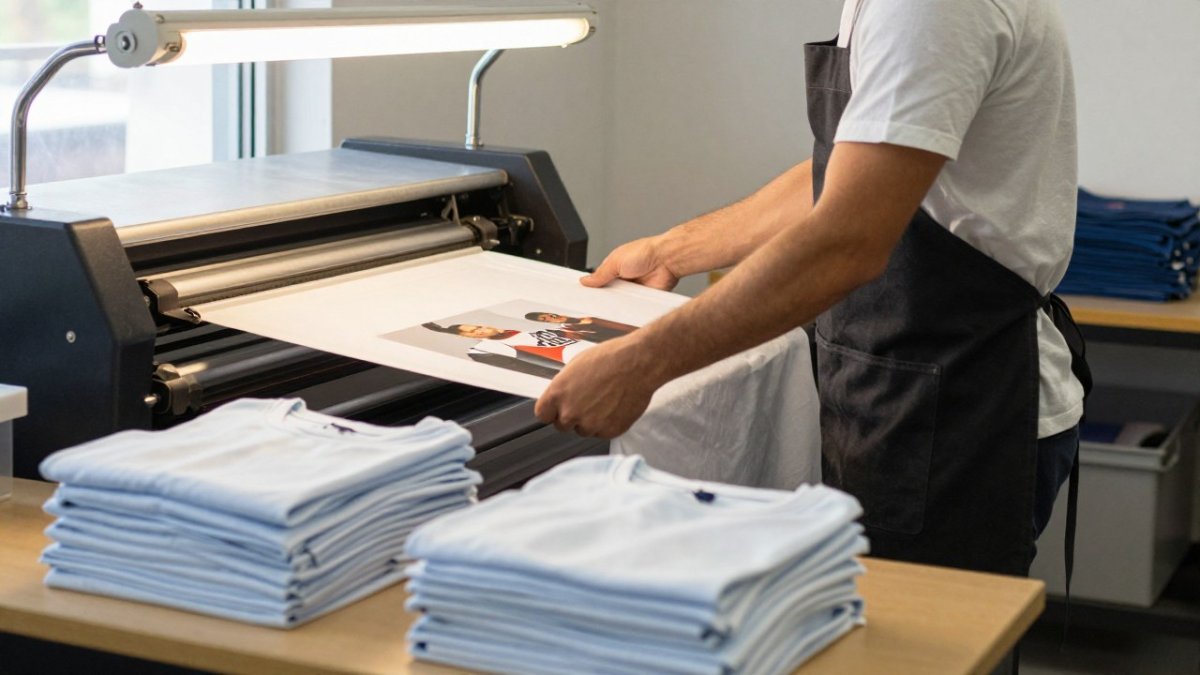
Printed-to-order apparel costs break into a few clear buckets: the blank garment, the printing or embroidery, the labor, fulfillment, overhead like equipment and workspace, and the artist's share.
The blank garment. A heavier ring-spun cotton tee costs more than a thin commodity tee before any ink touches it. Fabric weight, yarn quality, and construction all move the blank price.
The decoration. Decoration method and complexity affect the cost of each piece, so a simple design and a multi-color design are not the same job.
The labor. Someone preps the file, checks placement, loads the garment, pulls the print, cures it, folds it, and packs it. On a small batch, that labor spreads across fewer units.
Fulfillment and overhead. Packing materials, shipping labels, workspace, equipment, and store software all have to be covered. On a bulk warehouse order these are tiny per unit; on a per-order print-to-order model they are not.
The artist's share. This is the bucket mass-market apparel usually skips entirely. On artist-led apparel, a portion of what you pay goes back to the person who made the design.
Here is how mass-market and artist-led production compare:
| Factor | Mass-Market Retail | Artist-Led Production |
|---|---|---|
| Production run | Thousands of units | Small batches |
| Design source | In-house or licensed | Original artist work |
| Print method | High-volume screen printing | Screen printing or print-to-order |
| Artist payment | Often a flat fee or none | Royalties or direct pay |
| Fulfillment | Bulk warehouse | Packed per order |
| Unsold inventory risk | Carried by the retailer | Avoided by printing to order |
A transparent way to think about the split. We will not quote a fake itemized receipt, because real numbers move with the garment, the print, and the batch size. But the shape is consistent: blank and decoration are the biggest line items, labor and fulfillment next, overhead a smaller slice, and the artist's share comes out of what is left. The same buckets exist on a mass-market tee, just spread across thousands of units instead of dozens, with the artist bucket usually empty.
Why print-to-order changes the math. A traditional artist merch run means guessing demand, paying for inventory up front, and eating the cost of whatever does not sell. Print-to-order flips that: no unsold boxes, but a higher per-unit cost because each item is produced on demand.
Once your print arrives, a little care goes a long way. Our guide on how to care for printed apparel so prints last covers wash and dry habits that keep a design from cracking or fading, and always follow the individual garment care label first.
How Artists Make Money From Merch (and Why Royalties Matter)
How artists make money from merch depends on the deal. Some earn a flat fee for a design; others earn a royalty, a small share of each item sold. Royalties matter because they tie the artist's income to the success of the work and reward designs people actually want to wear.
The common deal structures. A flat fee pays the artist once, up front, and the seller keeps everything after that. A royalty pays a percentage of each sale, so the artist shares the upside, and the risk. A hybrid pairs a smaller up-front fee with a lower royalty. On a major tour, merchandising company and venue commissions can take their cuts before the artist sees anything; on an independent shop, the artist is usually closer to the money.
Why royalties matter to you as a buyer. When you buy from an artist-led shop, part of what you pay goes back to the person who drew the design. A royalty also aligns incentives: the artist wants the design to hold up, because a print that cracks after three washes does not sell a second time.
The maker-side question nobody answers: how do you price this sustainably? Most pricing advice for artists stops at "charge what you're worth." That is not a framework. Here is one that accounts for the costs, fees, and unsold inventory that decide whether a merch line survives.
- Start with your true unit cost. Blank plus decoration plus labor plus packaging plus the shipping label. If you print to order, that per-unit cost is higher than a bulk run, price from the real number.
- Add your platform and payment fees. Every sale carries a processing fee and often a storefront fee, taken off the top.
- Budget for unsold inventory if you hold stock. Spread the cost of dead units across the ones that sell, or you are subsidizing them yourself.
- Pay yourself a real artist share. Treat it as a line item, not leftovers. If the design cannot carry that share at a price customers will pay, change the design or product, not your pay.
- Leave a margin for the business. Equipment, software, returns, and the next design all cost money.
Watch out: pricing from a bulk-run unit cost while actually printing to order is the most common way independent artists lose money on every sale, the per-unit number has to match how you actually produce.
Independent versus established artists. An independent artist printing small batches has a higher per-unit cost and less bargaining power on blanks and fulfillment, so the price reflects that. An established artist on a major tour may get better per-unit pricing but gives up a slice to the merchandising company and the venue. Neither is "fairer", they are different cost structures.
You can browse the Siren & Ember collections to see the artwork and the people it comes from.
Mass-produced clothing wins on price. Artist apparel wins on the story, the artwork, and the fact that a real person got paid for their work. If you want designs with a wild spirit and an artist behind them, Siren & Ember prints tees, hoodies, sweatshirts, women's tanks, and beanies to order, with Viking, nautical, and cryptid artwork plus Savage Heart and Merry Mayhem lines. Get started with Siren & Ember and wear something with a story.
Frequently Asked Questions
Why does artist apparel cost more than mass-produced clothing?
Artist apparel is often produced in smaller runs, and original artwork adds design work that mass-produced graphic tees often skip. Pricing depends on quantity, design, and production method, so check Siren & Ember's website for current prices or a quote.
How can I tell whether apparel artwork is AI-generated?
Look for small inconsistencies: garbled text, extra fingers, mismatched symmetry, or details that blur when you zoom in. Ask the brand who made the design and whether AI tools were used. A straight answer is a good sign. Siren & Ember may use AI-assisted artwork, so ask about how each design was made.
Does buying artist apparel actually support the artist?
It can, but it depends on the deal. When a brand pays royalties or revenue share, part of each sale goes to the artist. Printed-to-order models generally avoid holding leftover stock. Ask how the artist is paid before assuming a higher price means a bigger cut for the creator.